RFID Door Access Control
Starting Point
Have you ever thought about how the main door of your apartment works when you badge in? Or the security tags on clothes in your favorite shop? Or the contactless payment on your credit card? Well, these are questions I have been asking myself. And I found that they all share something in common, RFID.
RFID stands for Radio Frequency Identification. It works with a reader and a tag. Where the reader emits a radio frequency signal and the tag close enough to it, picks up that signal, powers itself from it, and sends back its unique ID. All without a required battery in the tag. It seems interesting to me. So I decided to dig deep. What’s better than building it yourself to really understand how it works?
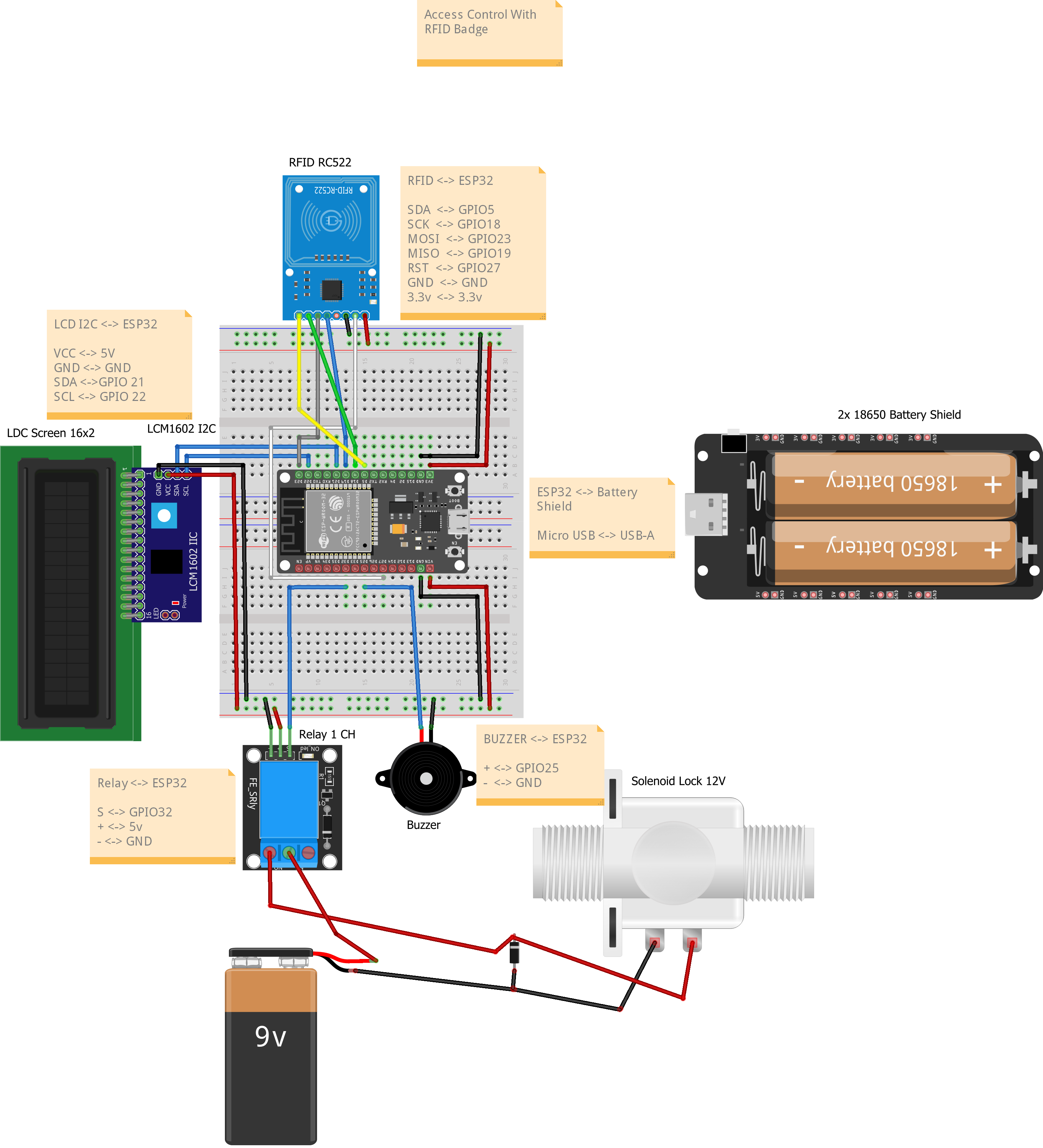
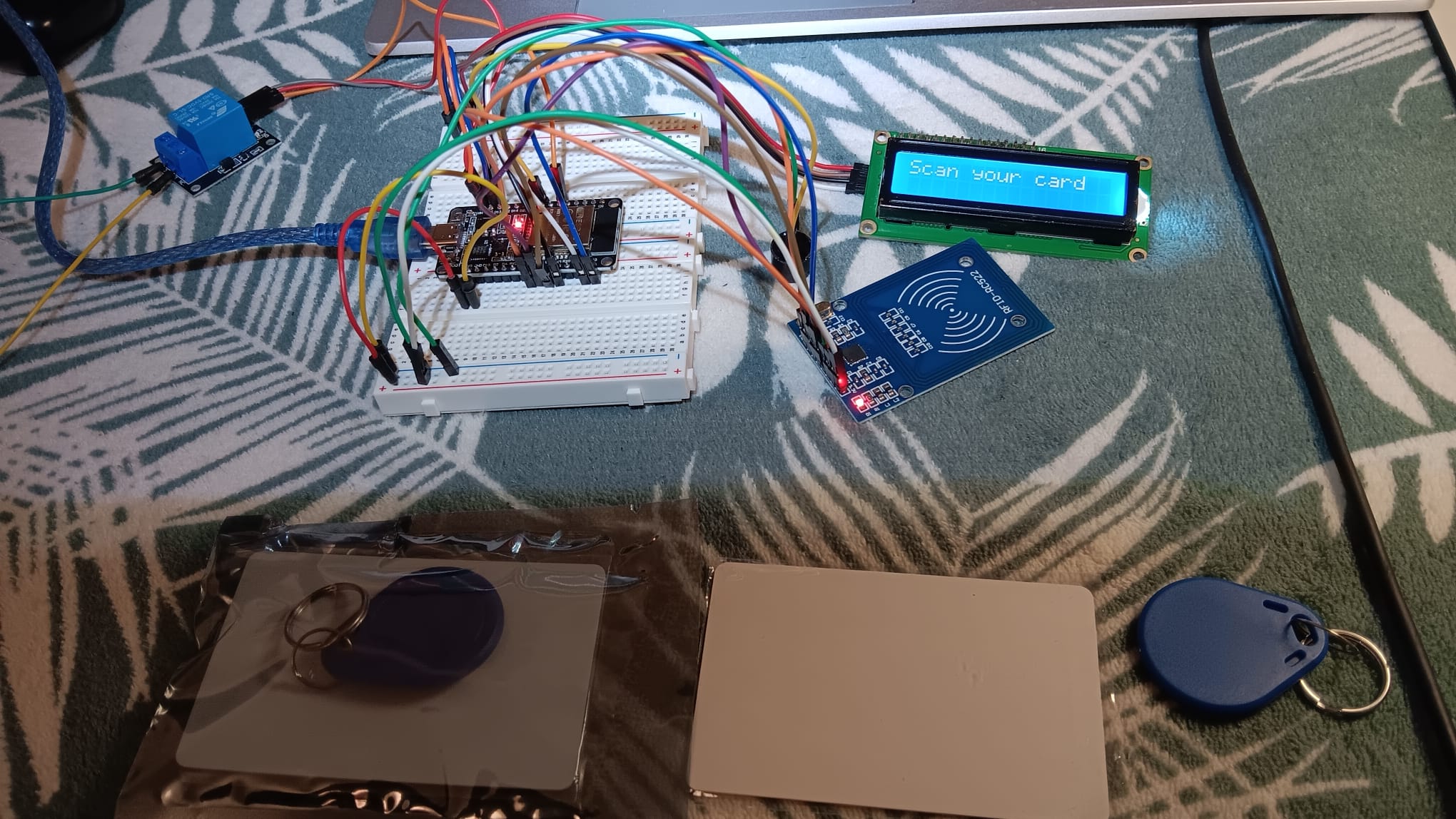
I decided to build a door access control system based on RFID. The starting idea was just build a working system where I could badge a card or a tag, and get a reaction, a lock opening, a visual feedback and an audio output to confirm the system was working.
After multiple tests and corrections, I got to a working prototype. But then I pushed it a step further.
Going Further With Logging Every Badge
I was already using an ESP32, a microcontroller which comes with built-in Wi-Fi. I thought it would be interesting to log every badge event. That way, I could collect real data and eventually do some analysis on it.
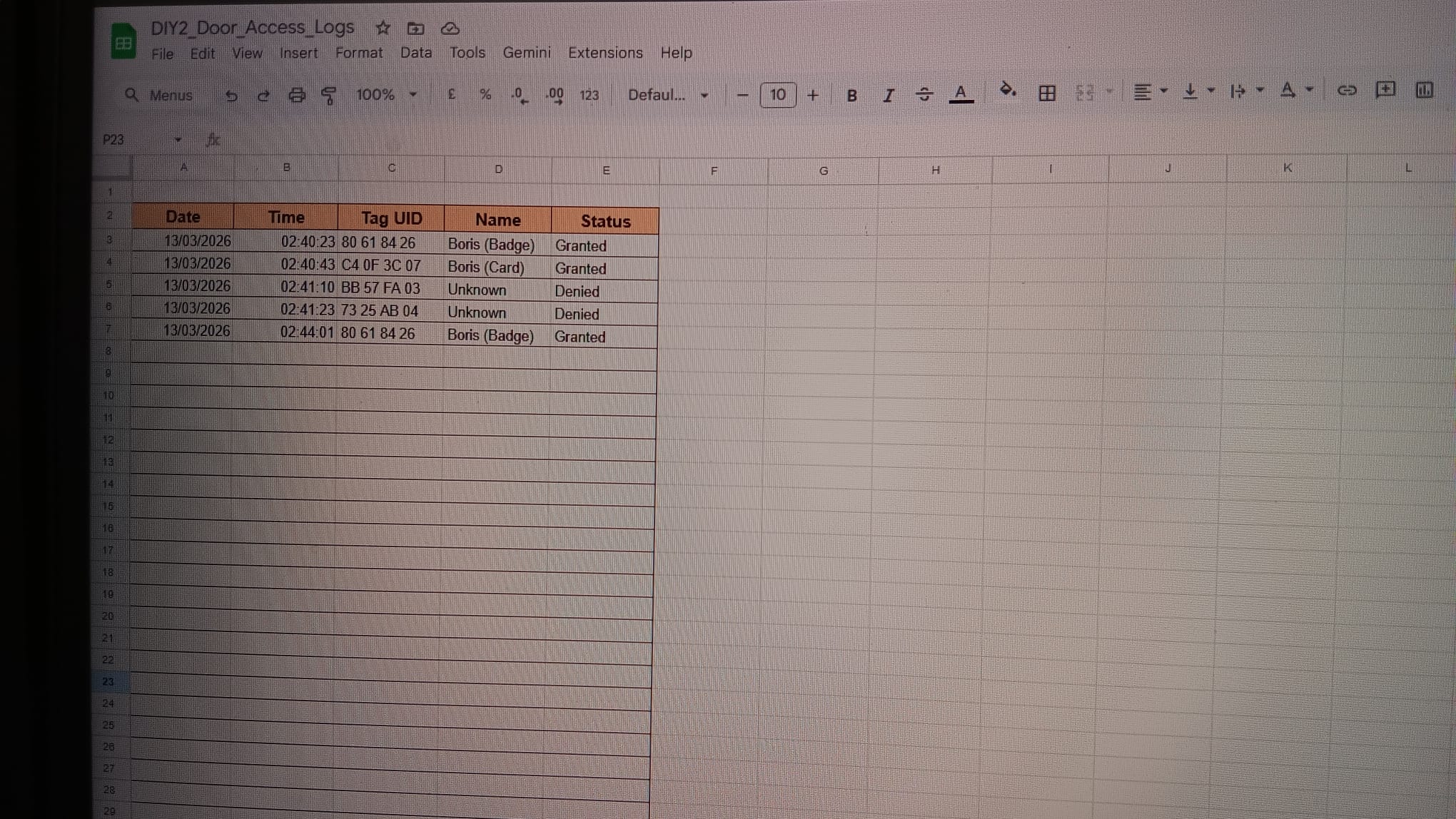
I discover a way to link the system to a Google Sheets file using Google Apps Script, a built-in extension in Google Sheets. Every time someone badges, the system logs Date & Time (when the badge happened), Tag UID (which specific tag was used), Name (who badged) and Access Status (whether access was granted or denied).
From Prototype to Product
Having a working prototype on a breadboard is satisfying. But I wanted to push it one step further. What if I turned this prototype into something that actually looks like a product?
I started thinking about what that would look like. Instead of designing something permanently integrated into a door, I wanted something that could standalone, something that could be placed, repositioned, and removed easily without any damage.
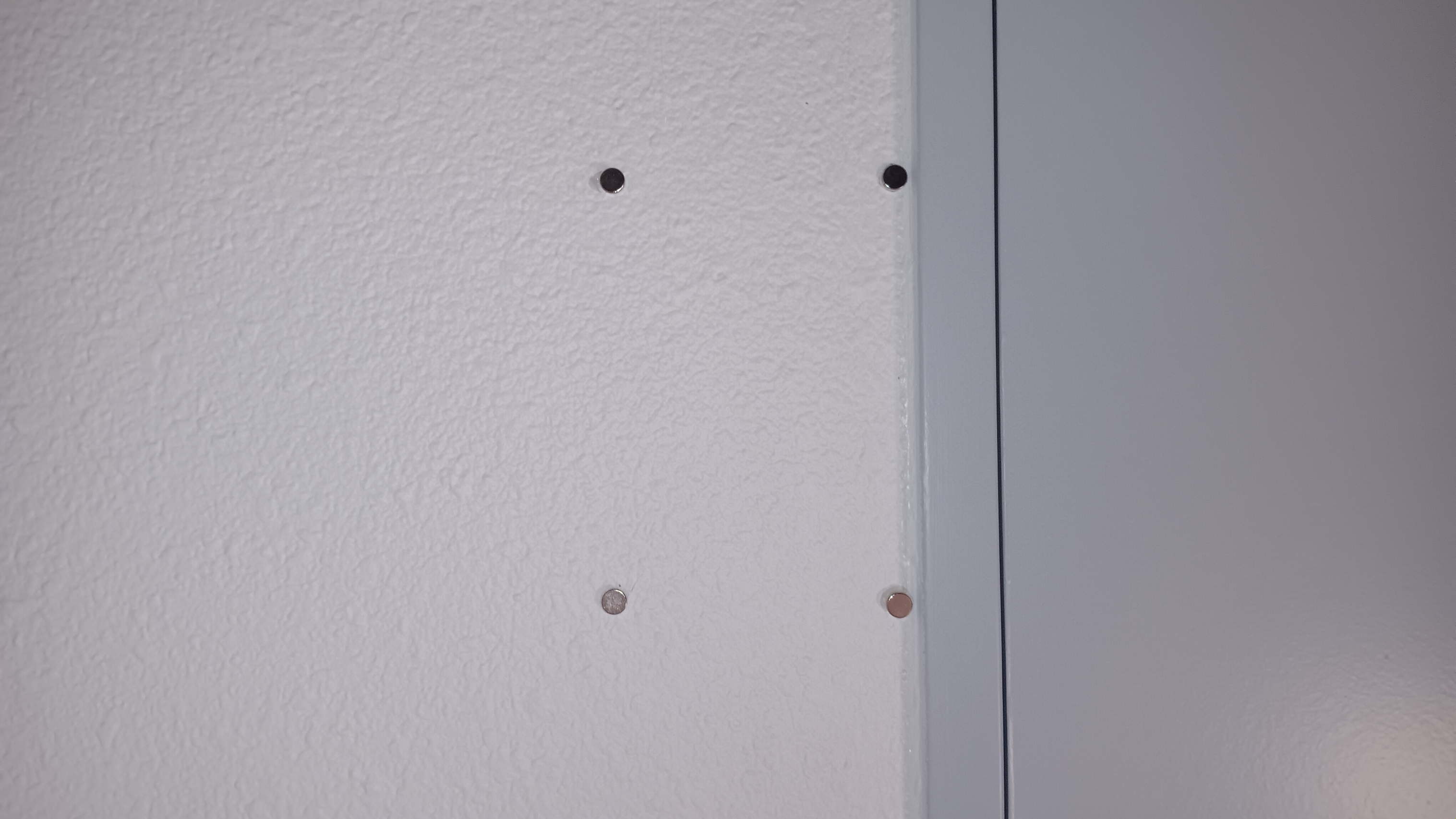
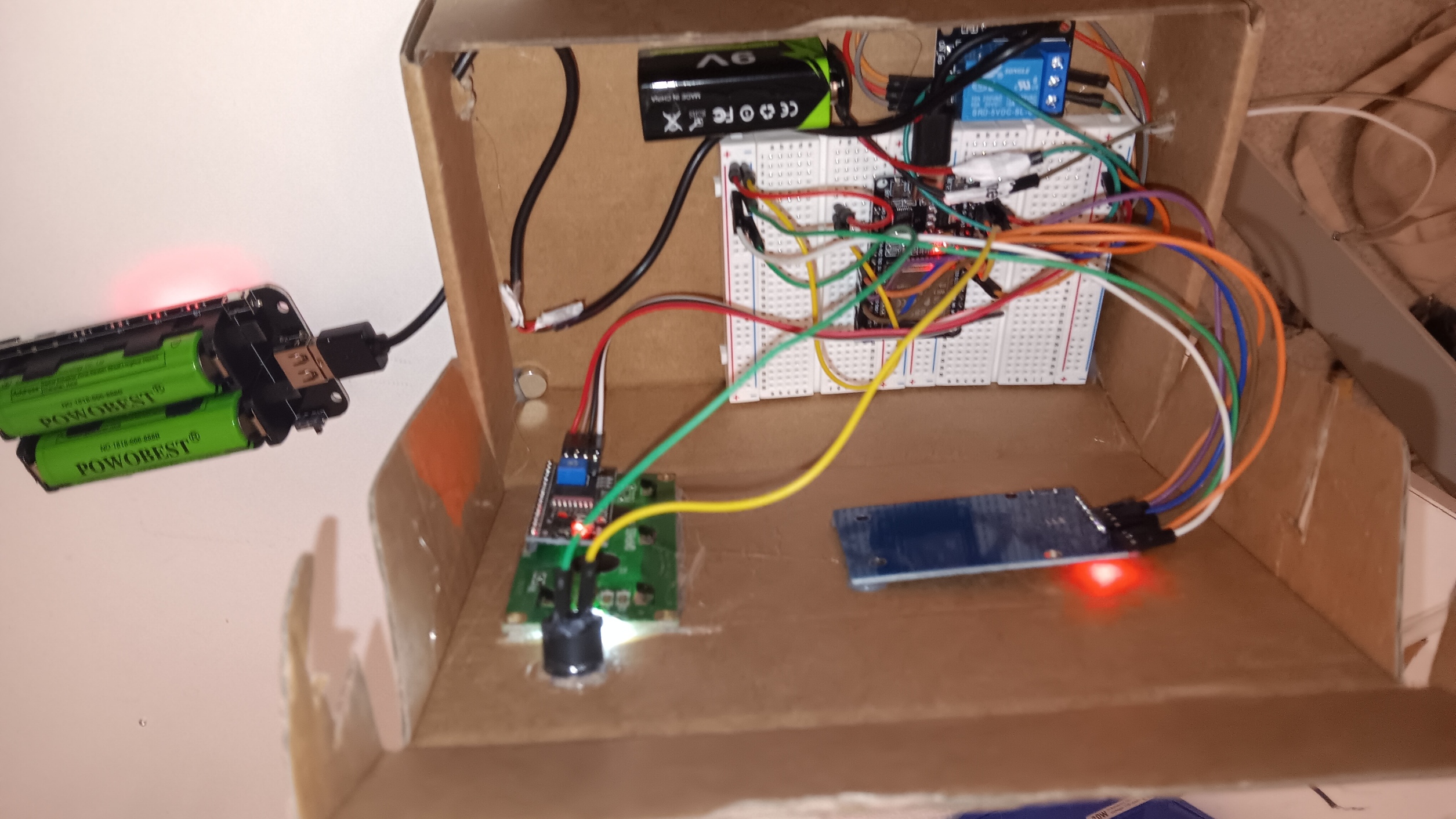
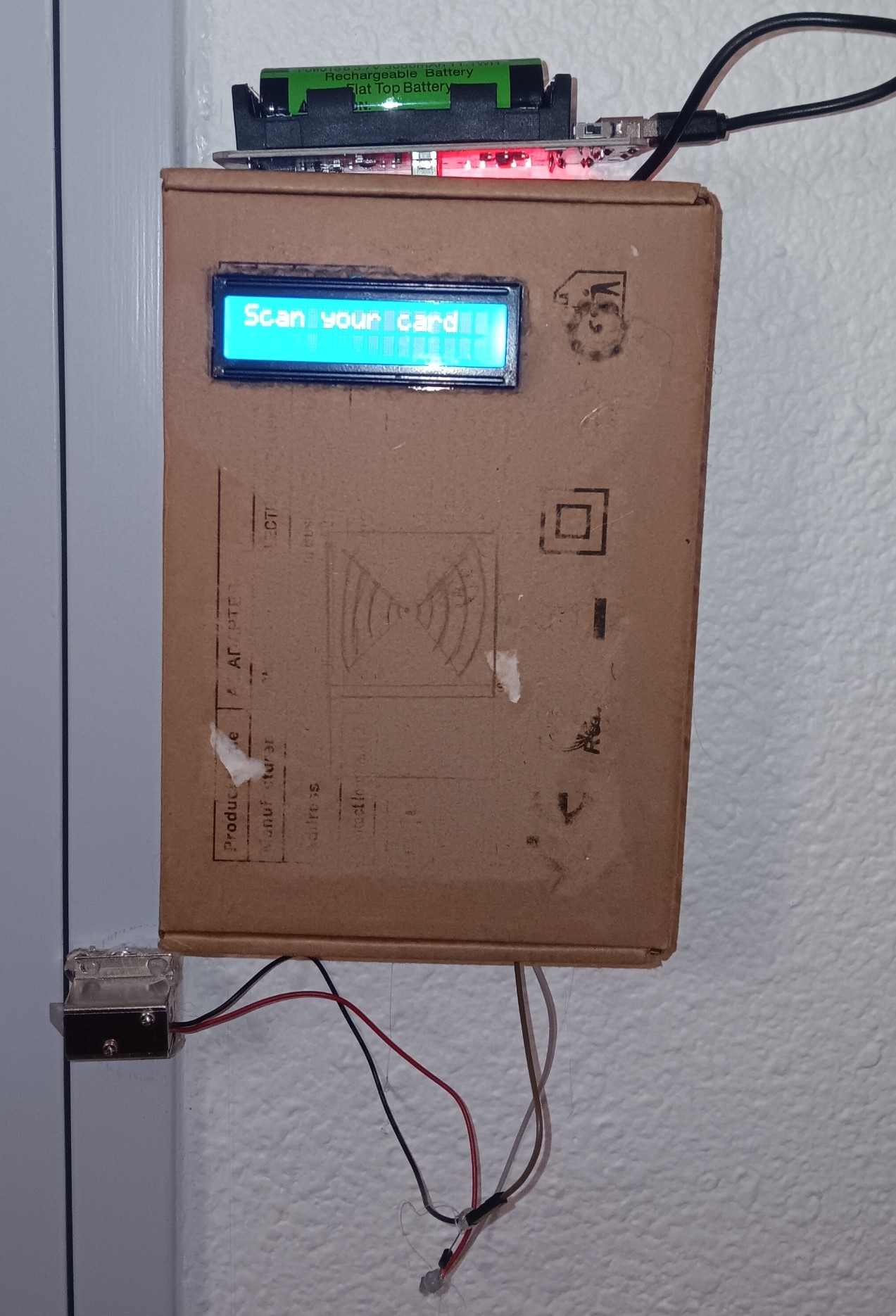
I ended up using magnets on the back of the enclosure so it could attach directly to a door, and a cardboard box to hold all the components together. It is not the most elegant solution, but it works, it is reusable, and it was fast to build. Good enough for a prototype 😁.
The result is something I can actually stick on a door, badge my card, see the LCD display react, hear the buzzer, and watch the log appear live in Google Sheets.
You can find the complete project on my GitHub repository: RFID_Access_Controller.
A few extra shots and clips from building the WIFI-Controlled Car.